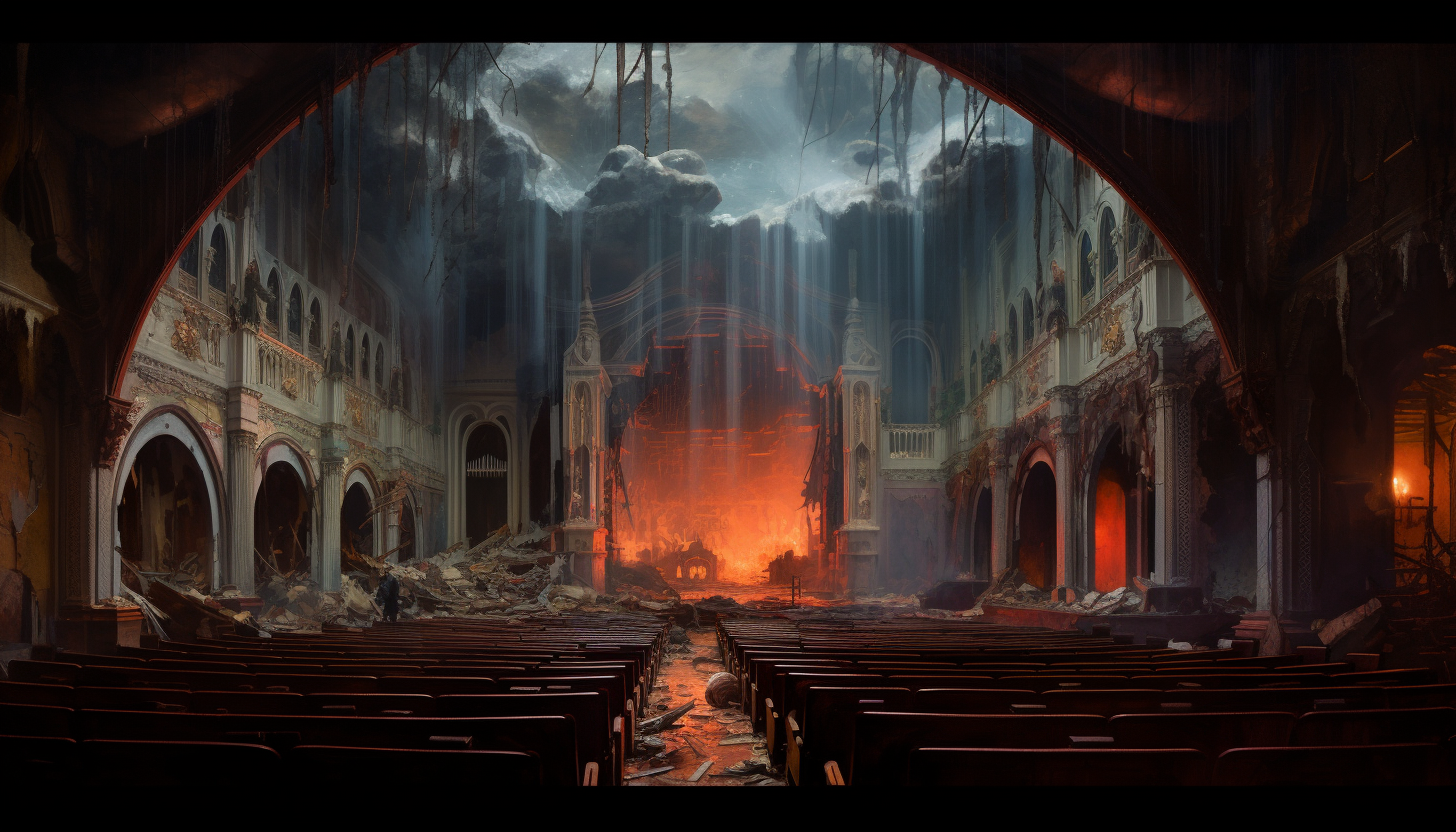

Bat out of Hell was impossible to follow up. Steinman and Meat Loaf both proved it. Steinman found some other success for several years and Meat Loaf established himself as a concert attraction in Europe and Australia, but neither ever came close to the success of their first collaboration. It was definitely unfair to expect them to match it–only a handful of albums have ever sold like Bat out of Hell did and only one artist (Michael Jackson) has ever had two original albums at roughly a comparable level or higher.
Steinman would be in full control this time. He would write, produce, and arrange the entire album. His crew (Todd Rundgren, Rory Dodd, Kasim Sulton, Jeff Bova, Steve Buslowe, Eddie Martinez, Roy Bittan, Ellen Foley, Jim Bralower, and Eric Troyer) recorded most of the album. He even had a solo speech (albeit one lifted from his solo album).
Interestingly, while plenty of people were back from the original Bat out of Hell, few were in the same role. Todd Rundgren was not a producer or a guitarist but was arranging and providing backing vocals. Kasim Sulton was not playing bass but providing backing vocals. Ellen Foley appeared in one background vocal. The only people to return in (essentially) the same roles as 1977 were Meat Loaf, Steinman (who is actually in an expanded role), Rory Dodd on backing vocals, and Roy Bittan on piano (who is also credited as an associate producer). That’s why I think it’s probably more accurate to view this as a fully Steinman production than a reunion, even though there is plenty of overlap between those two ideas.
That this album is explicitly a sequel to the original Bat out of Hell is borne out throughout–there are nods to and expositions on ideas, thoughts, themes, and even details from the original everywhere. But this time it’s a sequel–it’s taking things further and deeper, sometimes even changing the meaning of things we have already seen. It’s not an attempt to regurgitate the original album like Dead Ringer was and it’s not being forced to look like one the way Bad for Good was. And like any good sequel, it works on its own merits but gains even more from its context.
Back in 1977, Todd Rundgren talked about how Steinman’s ambitions were beyond the technology. He wanted sounds that weren’t possible with the recordings of the time. He wanted depth and differentiation that there were simply not enough tracks to create. Sixteen years later, with dozens of producing jobs under his own belt, Steinman could realize a lot more of his ambition. He had talked about making a bigger, “more heroic” version of Bat out of Hell, one that pushed beyond the satirical bounds of its predecessor. Now he could do it. And now he had the perspective to add something to it.
The music industry had changed, of course, since 1977. The booming, rebellious, sexually-charged rock and roll of the ’70s had been replaced by the brooding, funereal, muddy crunch of grunge. The harmonies and flights of fancy that had been a part of rock and roll since the Beatles and the Beach Boys were now looked down on, seen as relics of the bygone era that hoped for revolution instead of wallowing in the miserable present and idolized the road life without repercussions instead of anguishing in the damage it could cause to others. It was really a generational cycle, looking to the fans of Bat out of Hell‘s generation as failed parents to a world of forgotten children who needed any validation they could find to replace the love and attention their parents should have provided. The loud, fun rock and roll that celebrated freedom, escape, rebellion, and sexuality had essentially been replaced by grievance records against that generation’s parenting that took the musical simplicity of punk and turned deep inward, looking to expose any personal demon, real or imagined, in the name of “depth.”
And yet, somehow, in that environment, Bat out of Hell II: Back into Hell was an enormous hit. I can’t say for sure if it’s because of nostalgia, the fact that it was so diametrically opposed to the razorblades-in-the-bathtub mentality of so much of the rock music at the time, because it’s just that great, or some combination thereof, but it really hit.
I will get this out of the way right now: I have an unpopular opinion in that I think this album is better than Bat out of Hell. It’s not as groundbreaking, of course, because it’s self-consciously following its predecessor’s path; but I think it is a deeper, richer, more thoughtful version of everything that Bat out of Hell did and said. Meat Loaf probably sounds the best he has in his career here (though his voice would hold up surprisingly well, given his early vocal problems, until into his sixties). Steinman’s songs absolutely sparkle. As good as Rundgren’s guitar leads were the first time, I absolutely love Eddie Martinez’s work–his solos are a little more modern (go figure!) and a little more metal, which suits the somewhat classically-oriented Steinman songs really well.
There are some covers of earlier Steinman work on Bat out of Hell II. “Rock and Roll Dreams Come Through,” “Out of the Frying Pan (And into the Fire),” “Wasted Youth” (previously “Love and Death and an American Guitar”), and “Lost Boys and Golden Girls” were all on Bad for Good. “It Just Won’t Quit” and “Good Girls Go to Heaven (Bad Girls Go Everywhere)” were on Original Sin. That means that Steinman spent 3-4 years on essentially four songs. When Meat Loaf expressed frustration about how long Steinman took to write songs, it immediately sounds like a silly complaint, but then I think about that fact and it becomes more understandable. Those four songs, though, are absolute gold and account for over 38 minutes of the album. (Yeah, it turns out that he apparently really wasn’t going as over the top as he could the first time!)
Back when I first heard this album, I had never heard Bat out of Hell. I had never really heard anything like Bat out of Hell. And the more I have listened to both, the more I have realized that Bat out of Hell II is more a deepening of the original than an attempted recapitulation of it. I’ve looked forward to writing about this album since the start of this project, because I never get tired of these songs, and they are a big part of who I am.

 Crowd of Full Pockets
Leave a comment