
Following the commercial failure of Original Sin, Steinman took on a number of producing jobs while working on songs for a sequel to Bat out of Hell with Meat Loaf. During the four-year span between the release of Original Sin and Bat out of Hell II: Back into Hell, he only released one new song.
Steinman first worked with The Sisters of Mercy, which was at this point largely a one-man project of singer/guitarist/songwriter/producer Andrew Eldritch, producing two songs with Eldritch (a rare co-producing credit for Steinman) for its 1987 album Floodland, but he had not written anything for the band before. Eldritch is also credited as co-producing and co-writing this song, which probably makes him the most equal-footed collaborator of Steinman’s career.
Right from the start, “More” is absolutely dripping with atmosphere. Synth strings (admittedly cheap-sounding ones) open with echoing guitars, feedback, synthesized piano, and synths taking turns on top. A drum fill takes us into the first verse and Eldritch’s voice comes in. At the chorus, a loud and heavy guitar riff joins in along with cavernous drums and Eldritch’s voice getting replaced by a backing vocal from Maggie Reilly. We repeat the pattern two more times with minimal changes and then a far more classical-sounding piano version of the main riff bubbles up underneath as Eldritch starts responding to Reilly’s backing vocal with increasingly deranged, un-melodic, alternately mumbling and shouting versions of the same words. The piano cuts out and an almost church organ-like synthesizer backing accompanies one more repeat of the “And I need all the love I can get/And I need all the love” and the backing vocals cut out for a primal shout of “That you can’t get!”
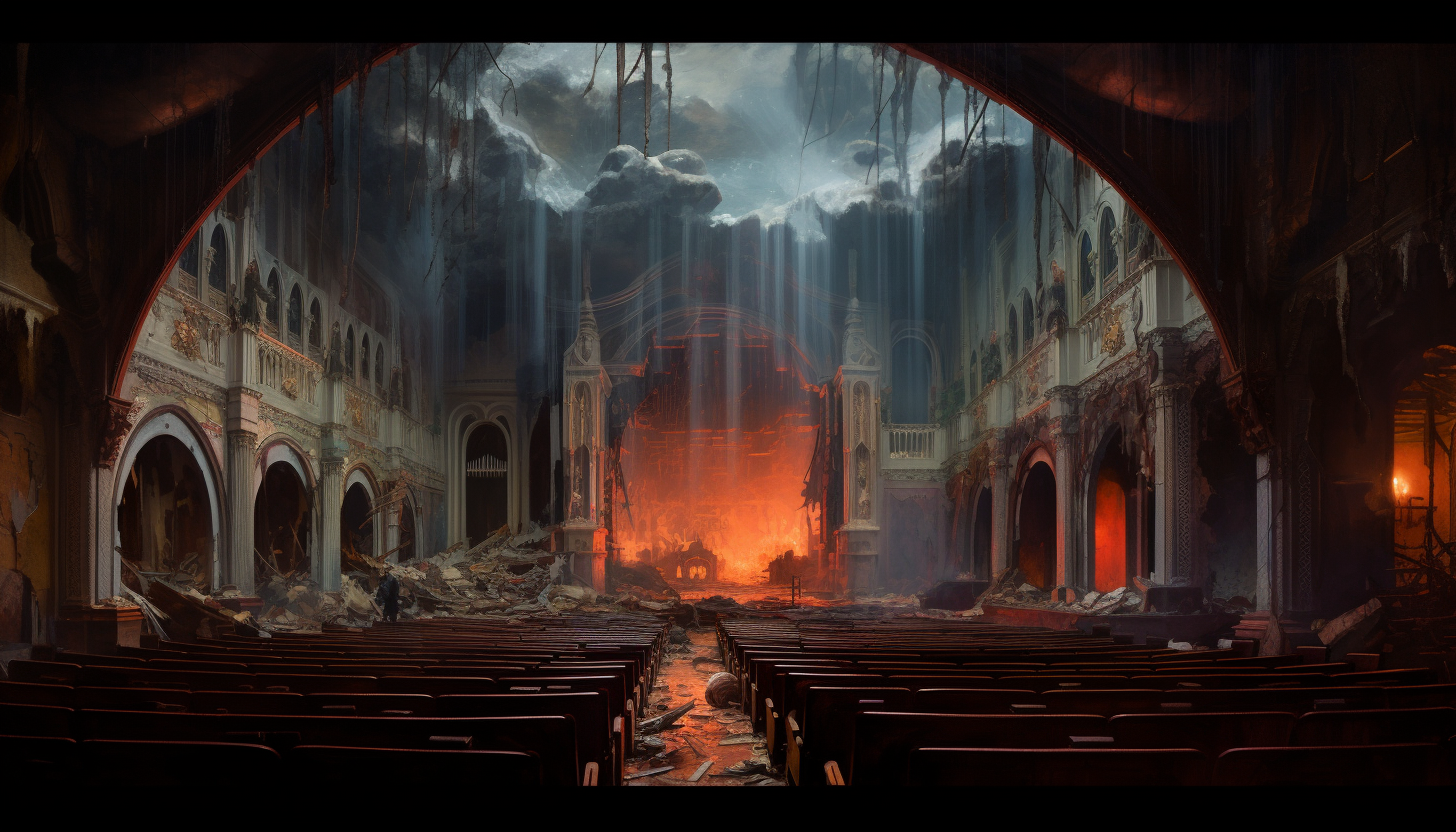
When a song stands out as dramatic and atmospheric within Jim Steinman’s catalogue, that’s saying something, and “More” does that. It has the dark, gothic atmosphere that much of Steinman’s work has, but it just pours out of every aspect of this song. It feels like it’s recorded in a 12th century cathedral with the Phantom of the Opera on the keyboards. It’s somehow both huge and cavernous, with plenty of sound throughout the spectrum but echoes that make it somehow seem empty.
Adding to the atmosphere is Eldritch’s vocal. While there isn’t much that’s technically impressive, he somehow manages to make the entire song sound like he’s ranting through gritted teeth. He’s not screaming or yelling, almost like what he’s saying is just too primal to be delivered like that. It feels like it’s being pulled out of him against his will as he grunts “You won’t get what you deserve/You get what you take.” The self-important pain and depression that would become the stock-in-trade of all rock music a few years later is delivered better here than any of those ever could.
If there is a part of this song that’s a letdown, it’s probably the lyrics. There are very few of them and they are so vague and general that it’s difficult to ascribe much real meaning to them. It’s a song about the unending, unquenchable desire that love can create in a person and how it leads to the feeling of an unyielding, unstoppable push toward one’s goal. Eventually, a version of this song would appear as Heathcliff’s theme in an MTV musical version of Wuthering Heights with songs by Jim Steinman, and it’s easy to see why. But it just doesn’t really go in depth on the subject and is exceptionally repetitive.
Maybe it’s really just because it’s one of the heaviest rock songs in his career, but I absolutely love “More.” I’ve heard little music in my life that’s so evocative of a particular atmosphere, let alone of one so specific. That it comes from Steinman collaborating in a way he really never did otherwise really makes me wonder if we lost out on some special things from his working habits. What would have come from Steinman working more with others? Maybe this was lightning in a bottle, but especially considering some of the people an older Steinman could easily have worked with (Tobias Sammet!), it’s a tantalizing fantasy.

 Crowd of Full Pockets
Leave a comment